“I wanted to be part of the environment, not just observe it from the outside.”
As Head Naturalist at Uga Ulagalla in Sri Lanka’s Cultural Triangle, Anna Katharina Raaben brings field experience, insight, and a hands-on approach to conservation. Originally from Germany, her journey has taken her from the corporate world to the wild landscapes of Africa and, ultimately, to Ulagalla – where she established the on-site Elephant Research Centre. In this Q&A, she reflects on what drew her to this work, the evolving role of the ERC, and how tourism can support meaningful coexistence between people and wildlife.
- 01. Can you tell us a little about your background and what first inspired you to work in conservation and guiding?
- 02. How did you come to join Uga, and what drew you to the property where you’re based?
- 03. You founded the Elephant Research Centre at Ulagalla, an incredible initiative. What inspired you to create it, and what are the centre’s main goals today?
- 04. How does your work help guests understand the challenges and solutions behind human-elephant relationships?
- 05. You’ve dedicated your career to conservation. What gives you hope for the future of Sri Lanka’s wildlife, and what role do places like Ulagalla, and the guests who visit, play in that vision?
- 06. What do you personally find most special about working for Uga?

I spent the first 29 years of my life in Germany. As a child, I was fascinated by wildlife, and most of my early knowledge came from watching nature documentaries. I dreamed of working with animals and protecting wildlife, but growing up in Germany, I had no idea how to make that dream a reality or build a career around it. Instead, I entered the corporate world and worked as a buyer for a German retail company. As I progressed in my career and began to earn more, I finally had the opportunity to travel to the places I had seen in those documentaries. But it didn’t take long for me to realise how uncomfortable I felt on well-organised, all-inclusive trips. It felt like window-shopping: you can see everything, but you never truly connect. I wanted to be part of the environment, not just observe it from the outside. The turning point came during a trip to the Galápagos Islands. I decided that would be my last pre-booked, packaged holiday. I wanted something real – and volunteering became that pathway.
My first volunteering trip took me to South Africa. It wasn't luxurious and there was no special treatment, but it was an incredible, life-changing experience. From that moment forward, I spent all my holidays volunteering, and it was deeply rewarding. My final volunteer placement before making a life change was in Zululand, where I worked on wild dog and rhino conservation projects. I cried like a child when it was time to leave – I had finally found my happy place. I booked another trip to South Africa within a week of returning home, and when I went back, I knew with certainty what I needed to do. I returned to Germany – this time without tears – resigned from my well-paid job, gave up my apartment, and moved to South Africa and Botswana for a year. That "year" never truly ended. I never went back. I met my husband in South Africa, and life eventually led me to Sri Lanka, which I have proudly called home for the past seven years.
Can you tell us a little about your background and what first inspired you to work in conservation and guiding?
How did you come to join Uga, and what drew you to the property where you’re based?
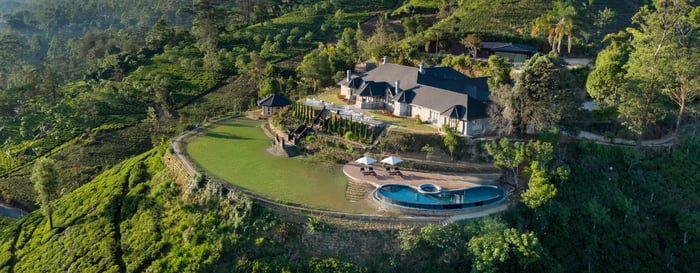
My husband and several friends had already been working at Uga for years, so perhaps it was only a matter of time before I joined the Uga family as well. Still, I would say it was a fortunate coincidence that I joined Ulagalla in 2020. The first time I visited Ulagalla, it was for a horse ride, followed by a beautiful evening by the lake. Although I had travelled extensively across Sri Lanka, I had never really explored this region before – and it immediately captivated me. I was impressed by the Walawwa, the expansiveness of the property, and above all, the lush greenery that makes it feel so alive. The property and its surroundings left a lasting impression on me. Soon after, a vacancy became available at Ulagalla, and I applied. Today, it has already been five years of working here, and I am grateful to be part of this wonderful journey with Ulagalla.
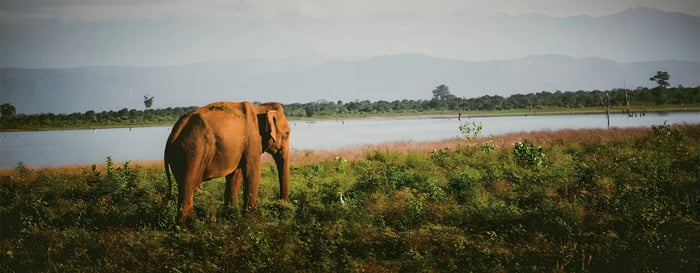
I always like to say that we never planned the ERC to become what it is today – it simply evolved the way it was meant to. When I started in November 2020, we were in the midst of Covid and the hotel was very quiet. Together with my team, we made use of the time available and spent hours exploring the property and its surroundings. Although we knew elephants lived in the area, we had not yet connected with any of them. What truly amazed us was the incredible wildlife within the hotel grounds – from fishing cats and otters to lorises. In January 2021, we had our first sighting of a large tusker on one of our trail cameras as it passed along the boundary of the property. At the time, I could never have imagined how significant this elephant would become in the years to follow. It all began with a simple logbook where we recorded dates, times, and locations of elephant sightings. It didn't take long for the pages to fill, especially as we encountered more elephants during our scenic drives in the area.
Alongside the excitement, we also became increasingly aware of the challenges faced by both elephants and the communities living here. Human–elephant conflict (HEC) was real – and it was unfolding right around us. That realisation compelled us to take action, and that was when the ERC truly began. We connected with other researchers, developed and refined our field methods, and shared our data to support island-wide research efforts. We also became involved in initiatives to mitigate HEC, including constructing our first village fence in 2022 – the same year the ERC office was established. Today, the ERC serves as a space to meet guests, share knowledge, and inspire meaningful conversations. Beyond research and conflict-mitigation projects, perhaps our most important mission is to raise awareness and educate. Education is the key to making a difference and creating lasting change. Elephants are so deeply connected to Sri Lankan identity, yet coexistence can be complex.
You founded the Elephant Research Centre at Ulagalla, an incredible initiative. What inspired you to create it, and what are the centre’s main goals today?

How does your work help guests understand the challenges and solutions behind human-elephant relationships?
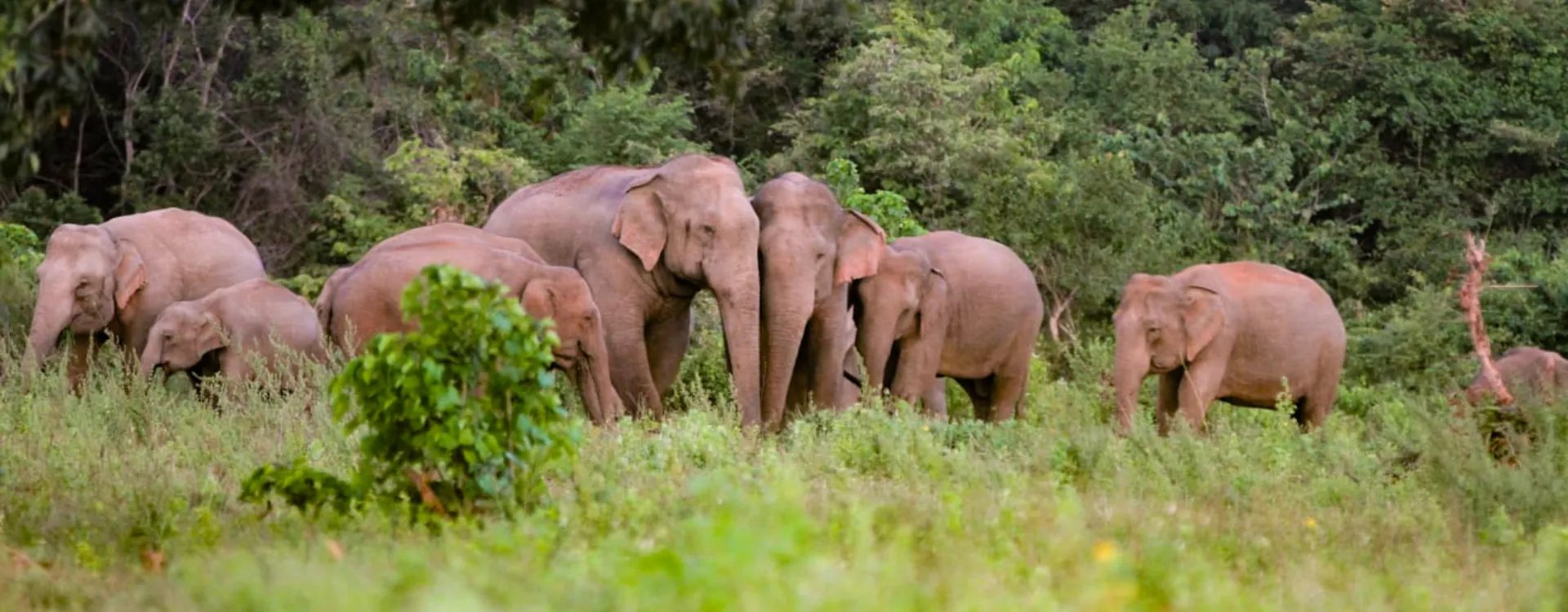
Many guests arriving in Sri Lanka have been exposed to a romanticised and often inaccurate image of Asian elephants. They are frequently portrayed in advertisements as gentle, calm, almost pet-like animals, closely connected to people. This creates the impression that everything is fine – but the reality is very different. Asian elephants, and Sri Lankan elephants in particular, are facing serious challenges. Although they hold deep cultural significance and are strongly tied to Sri Lankan identity, history, and tradition, the circumstances around them have changed drastically. Today, elephants are fighting for space and the right to exist. Habitat loss, deforestation, agricultural expansion, and a rapidly growing human population have pushed elephants into smaller and fragmented habitats, forcing them closer to human communities.
Unlike many smaller species that may disappear quietly without being noticed, elephants cannot go unnoticed – and the consequences of conflict are severe. Sri Lanka has the highest density of wild elephants in relation to land area, and as a result, the rate of human–elephant conflict here is the highest in the world. Each year, significant numbers of elephants and people lose their lives or suffer long-term damage. Through our work, we help guests understand this complex reality. We explain the factors driving conflict, highlight both human and elephant perspectives, and share ongoing efforts to support coexistence. It is essential that solutions are implemented now, and every action, even small-scale community projects, contributes toward a more harmonious future. Our goal is not only to raise awareness, but to inspire compassionate understanding and encourage meaningful support for conservation and coexistence efforts.
I believe strongly in the power our guests carry, often without even realizing it. While educating and supporting local communities is essential for building long-term coexistence, the tourism industry also plays a significant role in shaping conservation decisions in Sri Lanka. Guests come here for our natural diversity – the unique ecosystems, and the many small and big wonders this island holds. Losing species or habitats would have a direct impact on tourism and the country's future. For this reason, I believe Ulagalla and our Research Center play an important role in educating guests and strengthening the demand to value and protect Sri Lanka’s biodiversity. By raising awareness and inspiring appreciation, we help ensure that conservation remains a priority – not only for local communities and authorities, but also through the voices and influence of visitors who care about this island’s natural heritage.
You’ve dedicated your career to conservation. What gives you hope for the future of Sri Lanka’s wildlife, and what role do places like Ulagalla, and the guests who visit, play in that vision?
What do you personally find most special about working for Uga?
Since my start at Uga in 2020, Uga has been a great supporter, and I believe we have achieved a lot together. The management has been and continues to be very supportive, and we are excitedly planning new projects. Uga genuinely wants to make an impact, and it’s not just about PR. I’m grateful for the support I’ve received in setting up the research centre and in the projects we’re working on. And yes, I absolutely love Ulagalla! The property, the surroundings, and the authenticity are unmatched. Taking guests on experiences and exploring the area is incredibly rewarding. It’s the quiet moments, like sitting by the lake, watching the birds gather in a tree for the night, and just immersing myself in the tranquillity of the moment. Ulagalla is truly a beautiful place.
Interested in visiting Uga Ulagalla? Speak to us about a tailormade Sri Lanka itinerary that brings you closer to the island’s remarkable wildlife, landscapes and conservation efforts. Our thanks to Anna for sharing her inspiring work.
Photography credits: Uga Resorts
Let us plan your
bespoke adventure
Lightfoot Travel organises tailormade holidays throughout Sri Lanka. Contact one of our expert travel consultants today to start planning.
Enquire Now